
Processed Cheese
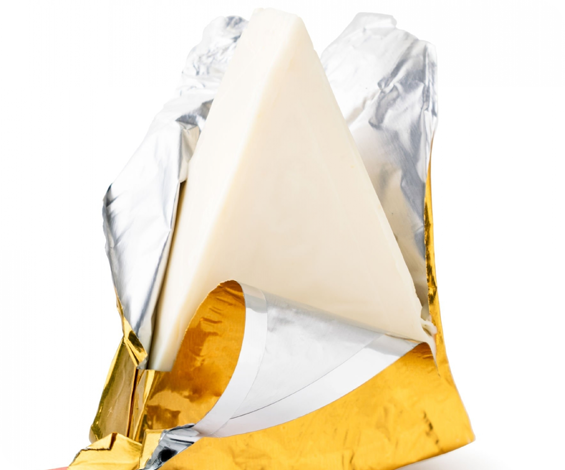
Processed Cheese
TurkPhos has designed the TurkPhos cheese phosphate range to achieve unrivaled texture in cheese and provide a wide range of the following benefits when used in cheese processing.

Emulsification

Ion Exchange

Regulation of pH
NO processed cheese without Phosphate emulsifying salts
- Buffering Capacity.
- PH value.
- Creaming effect.
- Ion exchange capacity

No processed cheese without Phosphate emulsifying salts
When heating cheese which has more or less strongly degraded protein and fat membranes, a separation of fat, water and protein will happen immediately at temperature above 60 to 65°C.
To achieve a smooth and homogeneous consistency without separation of fat, water and protein when taking ripened cheese as raw material, one obviously needs an emulsifier to bind free fat.
A good dispersion and dissolution of the proteins in products with high solid content are achieved by dosage additional water.
It is well knowing that casein molecules behave like ‘’natural emulsifiers’’, this functionality is lost in natural cheese because of Calcium bridge.
To re-install the natural emulsifying capability of the casein molecules the calcium ions in the cheese have to exchanged.
Similar to water conditioning, calcium ions are exchanged by adding ion exchangers: divalent ions are being exchanged through monovalent ions of strong alkalizes.
These ion exchangers have to show a good water solubility and must be natural in terms of their physiology and flavor.
Finally, these exchangers should allow the exchange to take place fast enough.